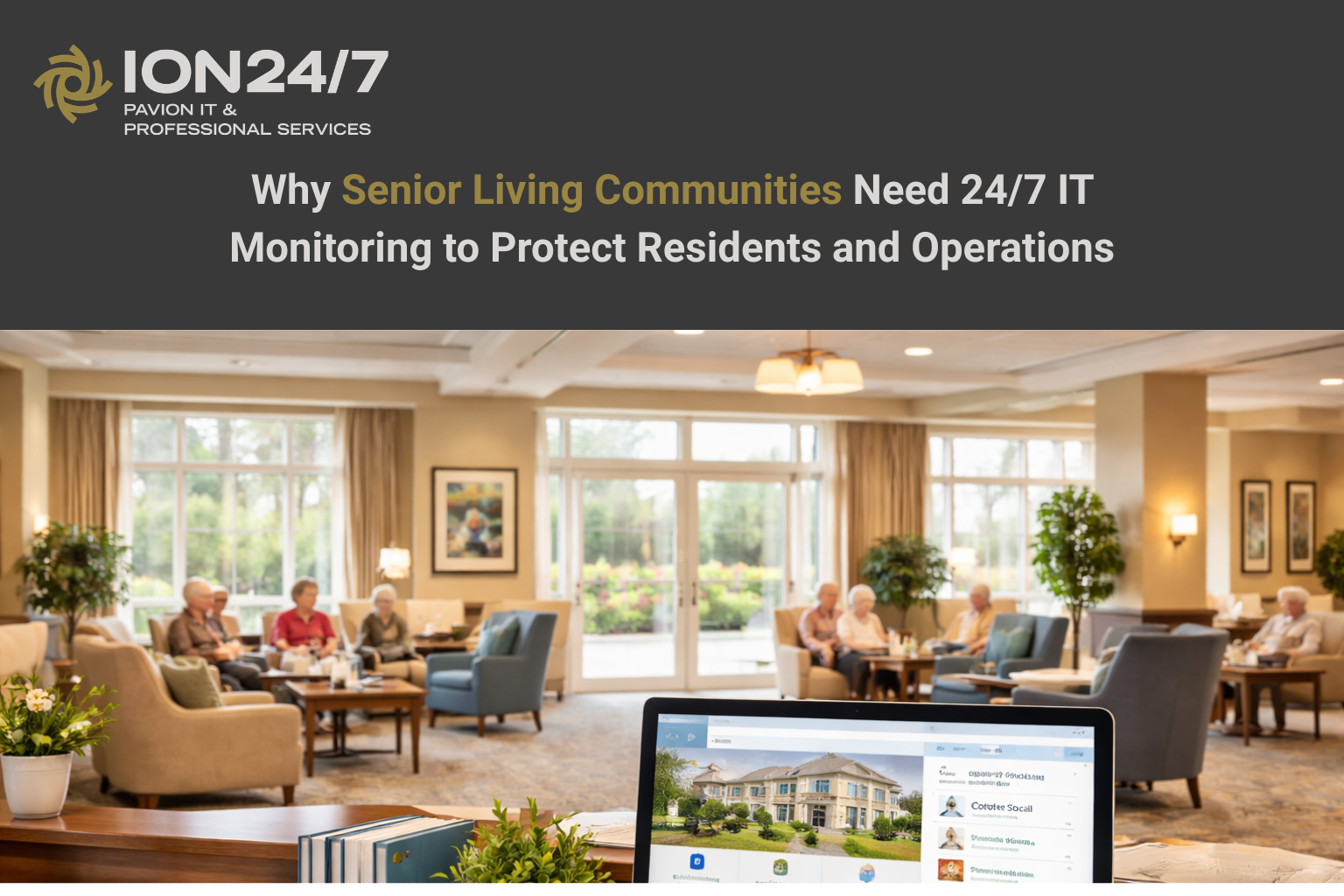
In senior living communities, technology is not just a convenience. It is directly tied to resident safety, staff communication, and daily operations. From nurse call systems to access control and electronic health records, these environments rely on systems that must work at all times.
The challenge is that many organizations are still operating in a reactive IT model. Issues are addressed after something breaks. In senior living, that delay can impact more than productivity. It can impact care.
A proactive, 24/7 IT monitoring approach helps ensure systems remain reliable, secure, and ready when they are needed most.
The Risk of Downtime in Senior Living Environments
Downtime in a typical office can slow business operations. In senior living, it can disrupt care delivery.
Critical systems depend on uptime, including:
- Nurse call and communication systems
- Access control and security systems
- Electronic health records (EHR)
- Video monitoring and emergency response systems
If any of these systems fail, staff may not be able to respond quickly to resident needs. Even short disruptions can create delays in communication, gaps in visibility, or safety concerns.
The issue is not just whether systems fail, but how long it takes to identify and resolve the problem.
Why Reactive IT Falls Short
A reactive approach means waiting until something breaks before taking action. This creates several challenges:
- Issues are often detected too late
- Troubleshooting takes longer without visibility into the root cause
- Small problems can escalate into larger system failures
- Staff are left dealing with disruptions in real time
In senior living environments, this model introduces unnecessary risk. By the time a problem becomes visible, response time is already compromised.
The Growing Cybersecurity Threat in Senior Care
Senior living communities are increasingly targeted by cyberattacks due to the sensitive data they manage.
These organizations store:
- Personal resident information
- Medical and health records
- Financial and billing data
Cyber threats such as ransomware and phishing attacks can disrupt operations and put resident data at risk. A single breach can lead to downtime, compliance issues, and loss of trust.
Without continuous monitoring, many vulnerabilities go unnoticed until it is too late.
What 24/7 IT Monitoring Actually Means
24/7 IT monitoring is not just about watching systems. It is about actively identifying and addressing issues before they impact operations.
A proactive monitoring approach includes:
- Real-time visibility into system performance
- Immediate alerts for outages or irregular activity
- Continuous monitoring of network, devices, and connected systems
- Identification of vulnerabilities such as outdated software or offline devices
- Rapid response to prevent escalation
Instead of reacting to problems, organizations can prevent them from happening in the first place.
Supporting Compliance and Accountability
Senior living communities must meet strict regulatory requirements, including those related to data protection and resident privacy.
A proactive IT strategy helps support compliance by:
- Maintaining system uptime and data availability
- Monitoring for potential security risks
- Providing documentation and reporting for audits
- Ensuring systems are updated and aligned with current standards
This reduces risk while helping organizations stay prepared for regulatory reviews.
Enabling Staff to Focus on Care
When systems are unreliable, staff are forced to spend time dealing with technical issues instead of focusing on residents.
Reliable IT infrastructure allows:
- Faster communication between teams
- Consistent access to critical information
- Fewer disruptions during daily operations
- Greater confidence in the systems they depend on
Technology should support care, not create additional challenges.
A More Connected Approach to Safety and Technology
Senior living environments rely on a combination of IT, security, and communication systems. These systems are often interconnected, and issues in one area can impact others.
A proactive monitoring approach helps ensure that:
- Security systems remain operational
- Communication platforms stay online
- Critical alerts are delivered without delay
- All systems work together as intended
This creates a more connected and reliable environment where both residents and staff are better supported.
Conclusion
Senior living communities cannot afford to rely on a reactive IT model. The risks are too high, and the impact extends beyond operations to resident safety and care.
24/7 IT monitoring provides the visibility and responsiveness needed to keep systems running, reduce risk, and support staff in delivering consistent, high-quality care.
As technology continues to play a larger role in senior living environments, a proactive approach is no longer optional. It is essential.
FAQs
What IT services do senior living communities need?
Senior living communities require reliable IT support for nurse call systems, EHR platforms, security systems, and network infrastructure, along with cybersecurity protection and monitoring.
Why is uptime important in senior living facilities?
Uptime ensures that critical systems like communication and emergency response tools are always available, allowing staff to respond quickly to resident needs.
How does 24/7 IT monitoring improve safety?
It detects and resolves issues before they cause system failures, ensuring that critical systems remain operational at all times.
Are senior living communities at risk for cyberattacks?
Yes, they are frequent targets due to the sensitive personal and medical data they manage, making cybersecurity a key priority.