
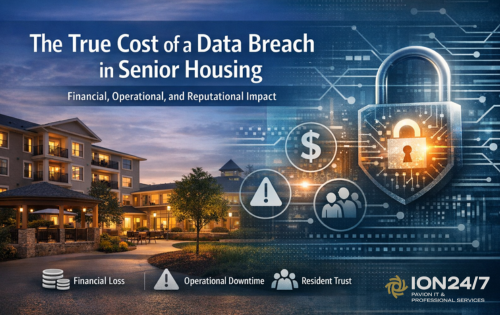
Senior housing communities are built on trust. Residents and their families expect not only physical safety, but also protection of deeply personal information. From medical records and payment data to access credentials and staff information, these communities manage some of the most sensitive data in any industry.
A data breach in senior housing is not just an IT issue. It is a financial, operational, and reputational crisis. Understanding the true cost of a breach helps leadership teams make informed decisions about cybersecurity investments before an incident occurs.
Why Senior Housing Is a High Value Target
Senior housing operators manage a unique combination of data that makes them especially attractive to cybercriminals:
Personally identifiable information for residents and families
Health and wellness records
Financial and payment information
Staff credentials and access systems
Networked security and life safety systems
Many communities also operate with lean IT resources and aging infrastructure, increasing vulnerability while attackers grow more sophisticated.
Direct Financial Costs
The Immediate Impact
The most visible costs of a data breach appear quickly and can escalate fast.
Incident response and forensic investigations
External cybersecurity firms are often required to identify the breach, contain the threat, and assess damage. These services alone can cost hundreds of thousands of dollars depending on scope.
Regulatory fines and legal exposure
Senior housing providers may face penalties related to HIPAA, state privacy laws, and contractual obligations. Legal fees, settlements, and compliance remediation add significant expense.
Notification and credit monitoring
Notifying residents, families, and employees is required in most breach scenarios. Offering credit monitoring and identity protection services further increases costs
Operational Disruption
When Systems Go Dark
Beyond direct expenses, breaches disrupt daily operations in ways that impact care and safety.
System downtime
Access control, video monitoring, nurse call systems, and electronic records may be taken offline during containment. This forces staff to rely on manual processes, increasing risk and stress.
Staff productivity loss
Employees shift focus from resident care to recovery tasks, training, and compliance activities.
Delayed admissions and billing
Operational slowdowns can delay move ins, interrupt billing cycles, and strain cash flow.
Reputational Damage
Trust Is Hard to Rebuild
In senior housing, reputation directly impacts occupancy.
Families entrust providers with the care and dignity of their loved ones. A publicized data breach raises concerns about overall safety, governance, and professionalism.
Industry specific impact
Prospective residents may choose competing communities
Referral partners may pause recommendations
Existing residents and families may reconsider long term commitments
Reputation recovery often requires increased marketing spend, community outreach, and time, none of which are reflected on a balance sheet but all of which affect revenue.
Long Term Financial Consequences
The Costs That Linger
Some of the most expensive impacts surface months or years later.
Insurance premium increases
Cyber insurance rates often rise sharply after a claim or coverage may become harder to secure.
Technology replacement and upgrades
Breaches often expose outdated systems that must be replaced sooner than planned.
Ongoing compliance and audits
Post breach oversight increases reporting requirements and audit frequency.
Leadership distraction
Executive time shifts from growth and care initiatives to managing fallout.
A Realistic Industry Scenario
Consider a mid size senior living community operating multiple locations.
A phishing email compromises staff credentials. Attackers gain access to resident records and payment systems. The organization incurs:
Forensic and response costs
Legal counsel and regulatory reporting
Resident and family notification
Temporary system shutdowns
Loss of prospective move ins due to negative publicity
The total cost can easily exceed seven figures, far surpassing the annual cost of proactive cybersecurity and managed services.
Prevention Is a Financial Strategy
The most effective way to control breach costs is to prevent incidents before they happen. Proactive monitoring, cybersecurity oversight, and managed services reduce risk by identifying vulnerabilities early and responding in real time.
ION247 helps senior housing providers protect critical systems, resident data, and operational continuity through proactive managed services designed for connected environments.
When it comes to cybersecurity, the question is not if an incident could happen, but how prepared your organization is to prevent and respond to one.