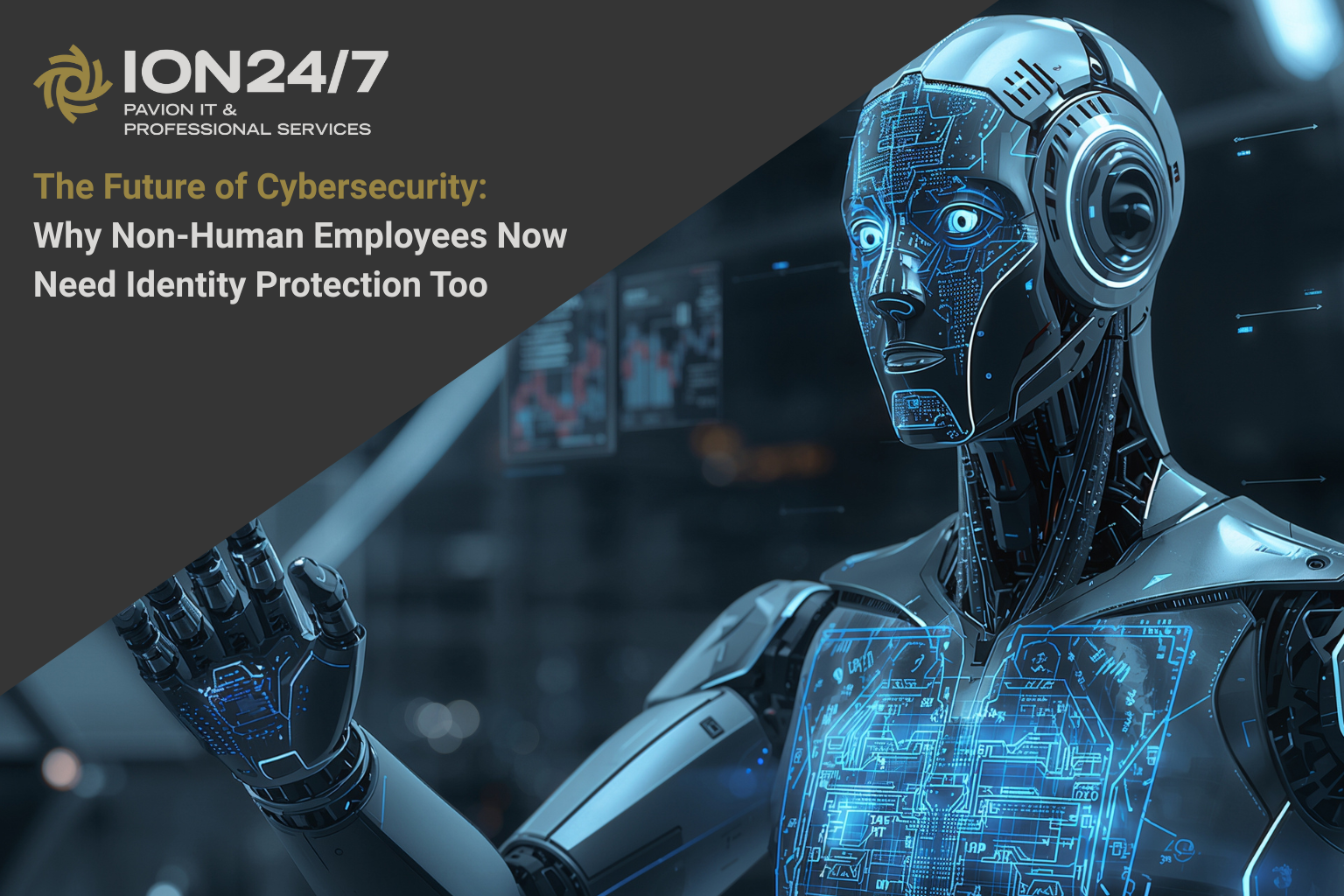
As organizations accelerate their adoption of Artificial Intelligence, cloud automation, and DevOps workflows, a new category of “employee” has quietly become one of the most powerful — and most vulnerable — in the enterprise: non-human identities.
These digital workers include bots, AI agents, service accounts, APIs, machine-to-machine processes, and automation scripts that perform critical operational tasks every day. And they’re multiplying at a staggering rate. In many cloud environments, non-human users now outnumber human users several times over — yet they rarely receive the same level of governance, monitoring, or security oversight.
According to ConductorOne’s 2025 Future of Identity Security Report, more than half of security leaders now believe protecting non-human identities (NHIs) is just as important as securing human accounts. However, most legacy Identity and Access Management (IAM) programs were never designed with machine identities in mind. As a result, NHIs often live in the shadows of security programs — and that lack of visibility is creating serious risk.
The Hidden Risk of Machine Identities
Unlike human users, non-human identities don’t log in through a UI, attend security training, or request password resets. They work silently in the background — but they also frequently operate with broad, permanent access to sensitive systems, code repositories, CI/CD pipelines, and cloud infrastructure.
That convenience comes with consequences.
Common NHI risk scenarios include:
- Hard-coded credentials stored in scripts or configuration files
- Secrets embedded in source code or repositories
- Excessive standing privileges that are never reviewed or revoked
- Minimal activity logging or behavioral monitoring
- API tokens and service accounts that never expire
If attackers gain access to a machine credential, they can often move undetected for weeks or months — because few organizations track or audit NHI behavior as closely as human activity. And as automation scales, every unmanaged identity increases the size of the attack surface.
Why Zero-Trust Must Apply to Machines — Not Just People
To close this gap, organizations must shift their mindset: bots, scripts, AI agents, and service accounts are identities — and they deserve the same rigor, governance, and security controls as human users.
A modern approach centers on extending zero-trust and least-privilege principles to every identity in the environment. Key best practices include:
- Treat Machine Users as First-Class Identities
Every NHI should be authenticated, authorized, logged, and auditable. Security teams must know what each identity is, what it does, and why it exists.
- Enforce Least-Privilege by Design
Use role-based access controls and time-bounded permissions so machine users receive only the access necessary to complete specific tasks — nothing more.
- Replace Static Credentials With Ephemeral Access
Adopt Just-in-Time access, short-lived API tokens, and automated credential rotation. Eliminating standing access dramatically reduces exploitation risk.
When these practices are operationalized at scale, non-human identities become visible, governable, and measurable — instead of unmonitored security blind spots.
Automation Isn’t Going Away — Security Has to Catch Up
Non-human identities are now a permanent fixture of modern infrastructure. They enable speed, automation, and innovation — but they also represent one of the fastest-growing entry points for cyberattacks.
The path forward is clear: organizations must secure machine identities with the same discipline used for human accounts. Every script, service account, and AI agent should be inventoried, monitored, governed, and continuously reviewed within a zero-trust framework.
By treating non-human employees as first-class identities, enterprises can reduce privilege-related risk, strengthen their security posture, and ensure automation drives progress — not exposure.
Secure Your Human and Non-Human Identities with ION247
At ION247, we help organizations strengthen cybersecurity resilience by securing every identity across the environment — whether human or machine. Our team delivers managed security, identity governance, zero-trust architecture, and continuous monitoring to protect service accounts, automation scripts, APIs, and AI-driven processes with the same rigor as employee accounts. With proactive threat detection, least-privilege access controls, and automated credential management, we help reduce exposure, prevent privilege misuse, and close security gaps created by modern automation.
If you’re ready to gain visibility and control over your non-human identities, our experts can help you design a smarter, more secure access strategy.
Learn more about ION247’s cybersecurity and identity protection services.